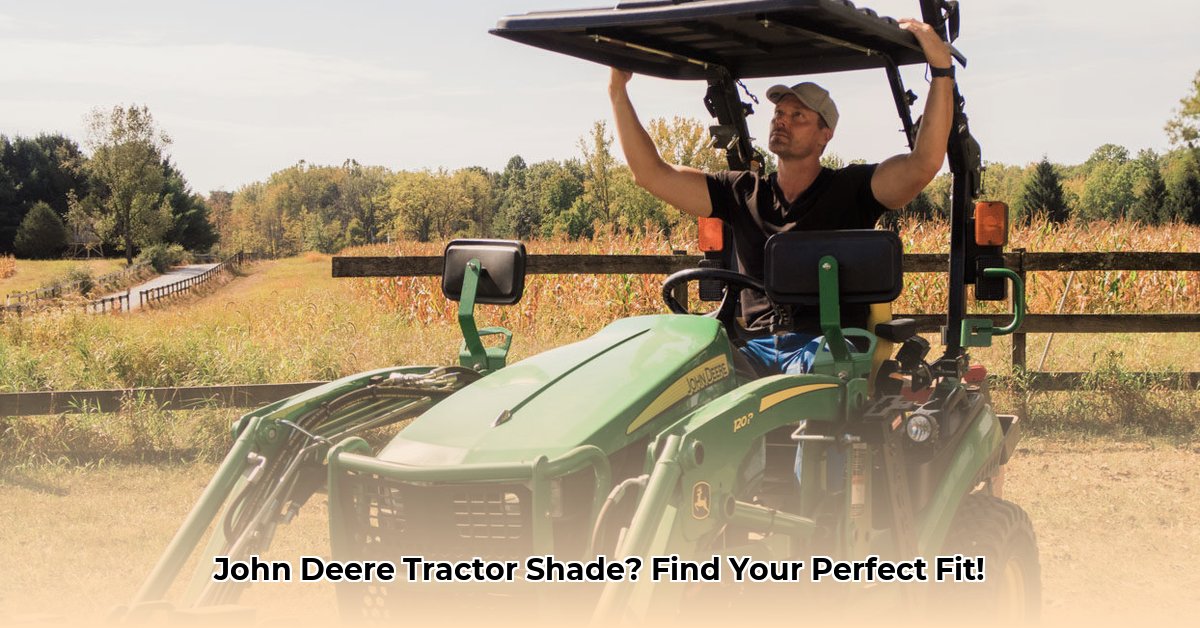
John Deere Tractor Shades: Enhancing Comfort and Productivity
Working long hours under the sun takes a toll. A well-chosen tractor shade significantly improves operator comfort, boosts productivity, and enhances overall well-being. This comprehensive guide navigates the world of John Deere tractor shades, helping you select, install, and maintain the perfect shade for your needs. We'll cover factory and aftermarket options, installation, maintenance, and troubleshooting. For more John Deere accessories, check out this helpful resource.
Types of John Deere Tractor Shades: Factory vs. Aftermarket
John Deere offers factory-made canopies for select models, characterized by precise fit and integration with the tractor’s design. These often come with a higher price tag but ensure seamless compatibility. However, the majority of choices lie within the diverse aftermarket, offering a wider range of styles, materials, and price points.
John Deere Canopies: Designed specifically for certain John Deere models, these canopies often utilize unique mounting systems. This precision fit guarantees compatibility but may limit options compared to aftermarket solutions.
Aftermarket Canopies: This sector provides extensive options in size, material (polyester, fiberglass, canvas blends), and price. Manufacturers like Thunderbird and Rhinohide offer canopies compatible with various John Deere tractor series (1000, 2000, 3000, 4000, 5000, etc.), providing increased flexibility but requiring careful attention to compatibility. Sizes range from compact (e.g., 41"W x 50"L) to larger models (e.g., 50"W x 57"L).
Choosing the Right John Deere Tractor Shade: A Step-by-Step Guide
Selecting the ideal canopy requires careful consideration of several factors:
Step 1: Measure Your Rollover Protective Structure (ROPS): Accurate ROPS measurements (width and depth) are paramount. Multiple measurements are vital to ensure precision. Incorrect measurements lead to ill-fitting canopies, compromising both safety and effectiveness.
Step 2: Verify Compatibility: Consult the supplier's compatibility chart. Ensure your tractor model and series align perfectly with the canopy's specifications. Many aftermarket suppliers provide detailed compatibility charts for different John Deere tractor series.
Step 3: Material Selection: Polyester and fiberglass are common materials. Fiberglass offers superior durability and weather resistance but is more expensive. Polyester is a lighter, more affordable alternative, though potentially less durable. Consider your budget and desired lifespan. Some blends combine the benefits of both materials.
Step 4: Evaluate Additional Features: Look for features like reinforced seams, UV protection, additional support structures for stability in windy conditions, and storage pockets. Consider your climate and working conditions when deciding on these features.
Installation Guide: A Safe and Efficient Process
Installation varies across canopy types. Always refer to the manufacturer's instructions. Safety precautions are paramount.
Step 1: ROPS Preparation: Clean the ROPS mounting points thoroughly, removing dirt, debris, and rust to ensure a secure fit.
Step 2: Secure the Canopy Frame: Using the provided hardware, attach the canopy frame to the ROPS, ensuring all connections are tight and secure. Avoid forcing any connections.
Step 3: Attach the Canopy Cover: Evenly stretch the canopy fabric over the frame, securing it as per the manufacturer's instructions. Avoid wrinkles and uneven tension.
Step 4: Final Inspection and Test: Thoroughly inspect all connections and give the canopy a gentle shake to assess stability. Address any loose parts before use.
Maintenance and Care: Prolonging Canopy Lifespan
Regular maintenance extends your canopy's life:
Regular Inspections: Inspect the canopy regularly for tears, rips, or loose fasteners. Address minor issues to prevent further damage.
Cleaning: Use a mild soap and water solution. Avoid harsh chemicals or abrasives. Rinse thoroughly and allow to dry completely.
Proper Storage: Store in a dry, shaded area when not in use.
Troubleshooting Common Problems: Addressing Potential Issues
Even with careful installation, problems may arise:
Poor Fit: Re-check ROPS measurements and compatibility. Contact the supplier if issues persist.
Material Damage: Minor damage may be repaired with patching kits or waterproof tape. For severe damage, contact the manufacturer or supplier.
Loose Parts: Tighten all loose bolts or screws. If problems persist, contact the manufacturer or supplier.
John Deere Tractor Shade Comparison: A Quick Reference
| Feature | John Deere Canopies | Aftermarket Canopies |
|---|---|---|
| Compatibility | Limited | Wide range |
| Price | Higher | Generally Lower |
| Customization | Less | More |
| Warranty | Varies by Manufacturer | Varies by Manufacturer |
Key Takeaways:
- Accurate ROPS measurements are crucial.
- Consider the different canopy materials (HDPE, fiberglass) and their properties.
- Evaluate the canopy's ease of installation, removal, and any additional features.
- Balance your budget with desired features and long-term value.
- Thoroughly research different manufacturers and read customer reviews before purchasing.
Choosing the right canopy is a significant investment in your comfort, safety, and long-term productivity. Remember, a well-fitted, well-maintained canopy significantly enhances your operating experience.